Neural Reward Circuitry in Portable Platforms Blending Rotational Elements with Tactical Choices During Live Sessions
Anna Wolf · Jun 6, 2026
Neural Reward Circuitry in Portable Platforms Blending Rotational Elements with Tactical Choices During Live Sessions
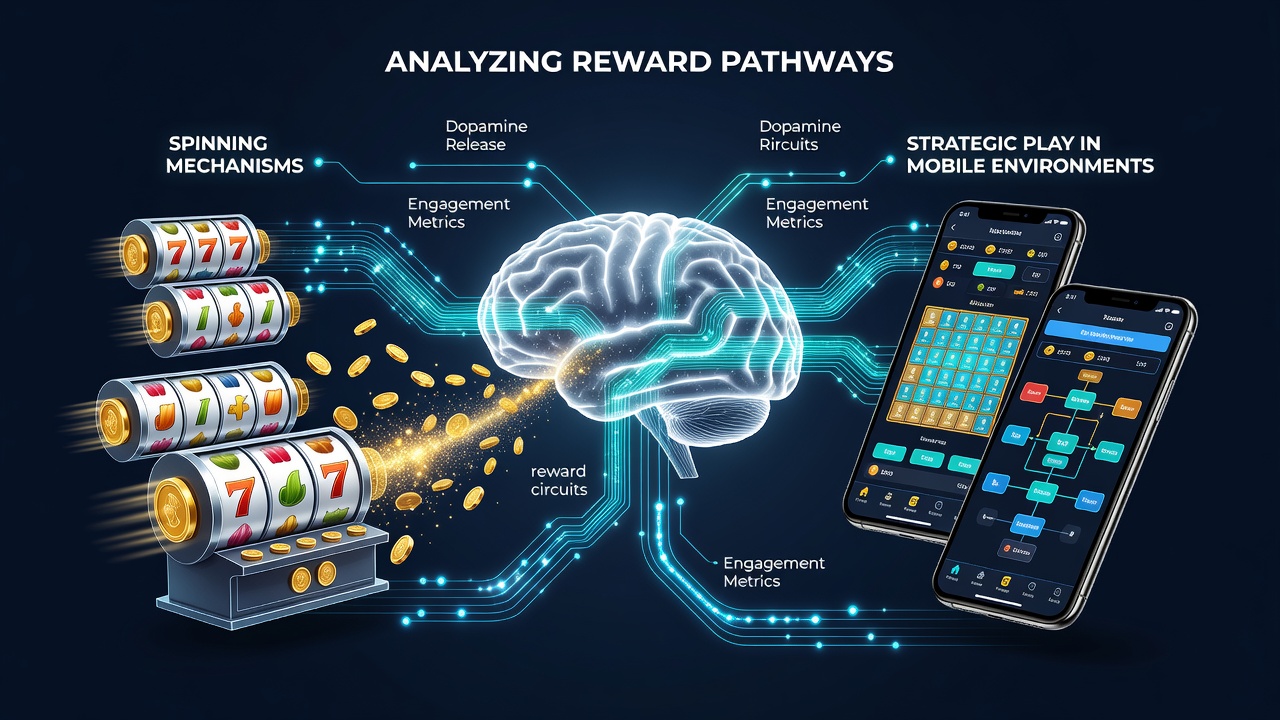
Researchers have mapped how rotational mechanics in mobile applications trigger dopamine release along the mesolimbic pathway while players execute planned moves in environments that update instantly based on collective inputs, and studies continue to track these connections through neuroimaging and behavioral logs collected across diverse user groups. Data from multiple labs indicate that the anticipation built during each rotation combines with the need for quick strategic adjustments when other participants alter the shared state in real time, which creates overlapping activation in areas such as the ventral striatum and prefrontal cortex.
Core Components of the Reward Circuit in Rotational Mobile Play
Neuroimaging work shows that spinning sequences produce brief surges in nucleus accumbens activity that precede the resolution of each outcome, after which players must immediately weigh remaining options against live feedback from the session; this pattern repeats because the system refreshes every few seconds and forces constant recalculation of risk versus potential gain. Observers note that the same circuitry engages during purely strategic segments when users decide whether to commit resources or conserve them based on the current shared board state, and the alternation between these two modes appears to sustain elevated tonic dopamine levels across longer play intervals.
Integration of Real-Time Interactions with Rotational Triggers
Live sessions introduce additional variables because each participant’s action modifies the visible parameters for everyone else, which means a rotation that would normally resolve in isolation now carries downstream effects on subsequent decisions made by others in the same instance. Figures from controlled trials reveal that reaction times shorten measurably when rotational outcomes arrive while the group state is still shifting, suggesting the brain treats the combined signal as a single predictive event rather than two separate stimuli. Australian research teams have documented similar compression of decision windows in field data gathered from thousands of mobile sessions, where the interval between rotation completion and the next strategic input averaged under 800 milliseconds.
Evidence from Recent Monitoring Programs
Reports released in June 2026 by cross-regional monitoring networks compiled anonymized telemetry from European and North American servers and found consistent elevation of reward-related biomarkers during hybrid rotational-strategic sequences compared with either mechanic used alone. Those datasets also tracked how session length correlated with cumulative exposure to live updates, showing that players who encountered frequent state changes after each rotation maintained higher engagement metrics without corresponding increases in reported fatigue. Canadian substance-use researchers contributed parallel findings that linked the frequency of such combined events to measurable shifts in self-reported craving scores among frequent mobile users, although the studies stopped short of claiming causation.
One longitudinal project followed a cohort across six months and recorded that individuals who regularly navigated both rotational and live-strategic layers displayed stronger functional connectivity between the orbitofrontal cortex and the dorsal striatum, regions previously associated with value updating under uncertainty. The same project noted that this connectivity strengthened further when the mobile application delivered outcome information within 300 milliseconds of each rotation, a timing window now common in many commercial builds.
Measurement Techniques and Data Sources
Electroencephalography combined with mobile eye-tracking has allowed researchers to isolate the precise moment when a spinning animation begins to modulate subsequent strategic planning, and the resulting traces show theta-band increases that precede the user’s next input by roughly 200 milliseconds. Government agencies in several jurisdictions have begun requiring operators to supply aggregated logs that include timestamped rotation events alongside live-interaction markers, which provides larger sample sizes than laboratory studies alone can achieve. A 2025 academic paper from an Australian university team cross-referenced such logs with survey responses and identified clusters of users whose play patterns aligned with heightened sensitivity to the joint reward signal.
Industry associations have started publishing summary statistics that separate rotational events from strategic ones while preserving the temporal links between them, and these reports indicate that sessions containing at least one live update within five seconds of a rotation maintain higher average revenue per user than sessions lacking that proximity. The pattern holds across different device types and operating systems, which suggests the effect stems from the temporal structure rather than hardware variables.
Conclusion
Current evidence establishes that reward pathways respond to the coupling of rotational mechanics and strategic choices when both unfold inside real-time mobile environments, and ongoing data collection programs continue to refine the temporal parameters that maximize or attenuate those responses. Regulatory bodies and academic groups across multiple continents now share standardized logging formats that will permit larger-scale comparisons in the months ahead, while neuroimaging studies refine the circuit-level maps that explain why the combined experience sustains engagement differently from either component in isolation.