Demographic Trends Driving Participation in Hybrid Reel-Card Games Across Licensed Markets
Cameron Hayes · Jun 30, 2026

Demographic Trends Driving Participation in Hybrid Reel-Card Games Across Licensed Markets
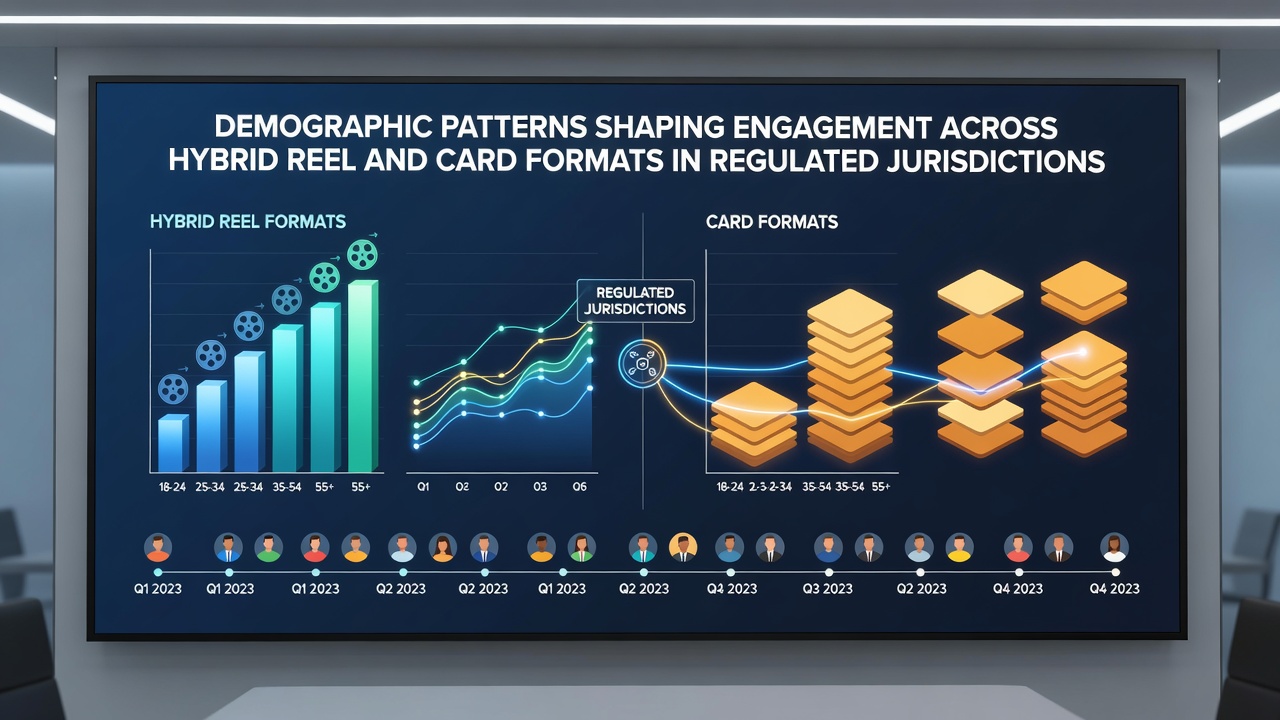
Hybrid formats that blend reel mechanics with card-based decisions have gained traction in regulated markets where operators must comply with strict licensing rules, and demographic factors such as age, income brackets, and regional location shape how different groups interact with these games. Data compiled by state gaming commissions in the United States reveal that players aged 25 to 44 account for the largest share of sessions in titles combining spinning reels with poker-style choices, while older cohorts gravitate toward simpler structures within the same platforms.
Age and Income Patterns in US Regulated States
Figures released by the American Gaming Association indicate that in states like New Jersey and Pennsylvania, participants between 30 and 45 years old generate over 60 percent of hybrid game revenue during evening hours, and this group often maintains longer play periods when deposit options allow quick switches between reel spins and card rounds. Higher-income brackets show elevated engagement with live dealer hybrids that incorporate strategic card elements, whereas lower to middle-income users concentrate activity on automated versions that require fewer decisions per session.
Researchers tracking mobile usage note that smartphone-based hybrids attract a younger slice of the audience, with those under 35 completing more frequent but shorter sessions compared to desktop players who favor extended card-focused segments. In June 2026, updated reports from several state regulators highlighted a steady rise in hybrid participation among users in the 18 to 24 range, driven largely by promotional bundles that combine free reel spins with entry-level poker variants.
Regional Variations Across North America and Europe
Canadian provincial data and European licensing records point to distinct geographic preferences, where urban centers in Ontario and the Netherlands display stronger uptake of hybrids among residents with university-level education. Observers note that these markets see greater crossover between reel enthusiasts and card strategists, resulting in hybrid products that adjust volatility settings based on average session length per demographic cluster.
According to industry analyses from the European Gaming and Betting Association, players in southern European jurisdictions tend to favor reel-dominant hybrids during daytime hours, while northern markets record higher evening volumes for card-integrated formats. Income levels correlate with device choice, as tablet users in higher brackets complete more complex multi-round sequences that merge both elements.
Gender and Device Influences on Session Behavior
Studies from academic research groups at institutions in Australia and Canada show that female participants represent a growing segment in hybrid environments, particularly when platforms offer adjustable stake ranges that accommodate varied risk tolerances. Male users continue to dominate overall volume, yet engagement metrics reveal female players maintain steadier retention when hybrids include tutorial overlays that explain card decisions alongside reel outcomes.
Mobile-first designs have accelerated this shift, with data indicating women aged 28 to 42 complete more hybrid sessions per week than their desktop counterparts. Regulators in multiple jurisdictions require operators to publish aggregated demographic breakdowns, which in turn help refine responsible gaming tools tailored to specific age and gender cohorts.
Future Tracking and Market Adjustments
License holders monitor these patterns through anonymized transaction logs, allowing adjustments to game mathematics that align with observed preferences across income and location segments. As hybrid titles evolve, licensing authorities continue to emphasize transparency in how demographic data informs product development while maintaining compliance with privacy regulations.
Conclusion
Demographic patterns continue to guide how hybrid reel and card formats develop within regulated jurisdictions, with age, income, gender, and regional factors producing measurable differences in session length, device preference, and feature selection. Regulatory bodies and industry groups compile ongoing statistics that operators use to calibrate offerings, ensuring alignment with player behaviors documented across North American and European markets through mid-2026.